
I believe in ‘sharing is caring’ and as a teacher, both when I worked in school and now at the university, I have always been willing to share my materials and good ideas. Most of my colleagues have been appreciative and they have willingly shared materials with myself as well. Sharing is win-win. However, about ten years ago when online teaching became very common at my university and we were involve in more and more online courses, not only myself but also colleagues started to become a bit worried about the material we produced. “What you did in course X last semester can be used again by teacher Y next semester – that’s no problem! Good!” Eh…? Myself and others started worrying about ownership and what happens with materials one has produced when it ends up with someone else. Credit, yes, but what happens with it? I suppose worries such as these triggered people’s creativity and it was not long until we got access to useful tools related to open teaching/learning, not least the whole idea with Creative Commons. I very much appreciated the YouTube video in which I learned more about CC, and the introductory video to topic 2 (with Alastair Creelman and Kiruthika Ragupathi) was also very helpful in this regard.
We had a very interesting discussion in my PBL13 group on the topic of openness, ownership, and ‘sharing & caring’. Today, me and others do not have to worry as much as before when sharing material, because it is easier to communicate about ownership and rights. Several members of our group bore witness of the value of sharing teaching material publicly online, as doing so often seems to have positive (rather than negative) consequences. Sharing online can be a way to make one’s name known, even.
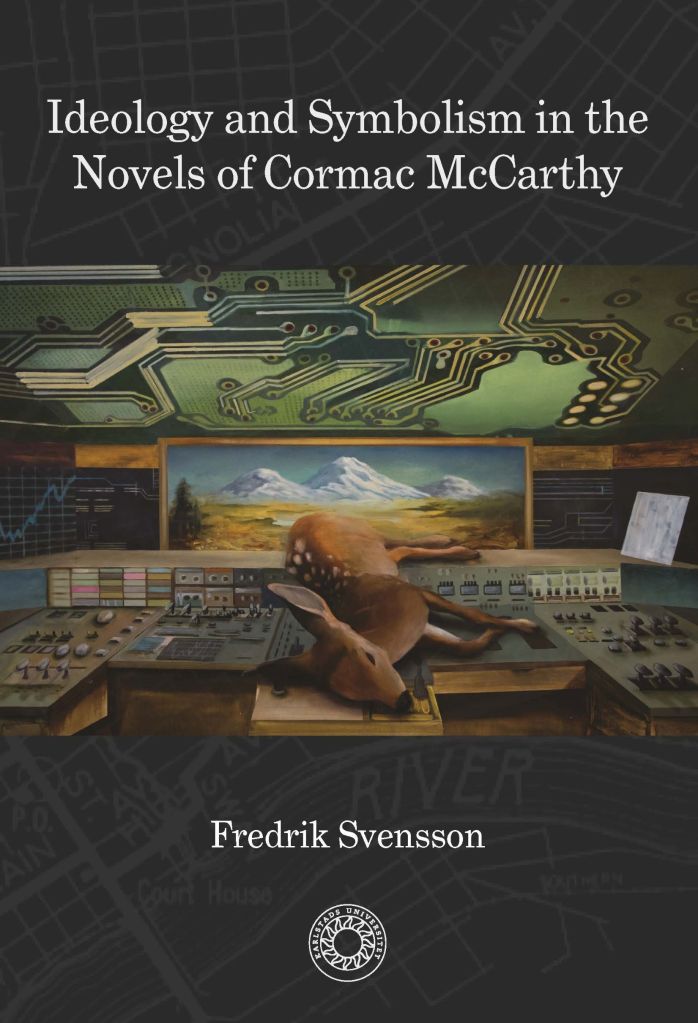
Having said so, what does all of this have to do with the heading of this blog post, Open Learning and Lurking Trolls? Well, all of us who are taking this course in the spring of 2020 are heavily affected in our work by the spread of the Coronavirus. Many of us need to deal with switching from campus to online teaching while, at the same time, we are involved in online learning ourselves. Personally, I had to step in and chair a disputation because other people had fallen ill. I believe it was the first disputation at my faculty that took place via Zoom (and I call it a zoomputation). Everybody involved prepared carefully in advance, checking time zones and the technique the day before with committee members spread around the globe, and so forth. Fredrik Svensson defended his thesis Ideology and Symbolism in the Novels of Cormac McCarthy brilliantly! It was a great defense and a very dynamic discussion between the doctoral candidate and his opponent, professor Nicholas Monk, University of Nebraska-Lincoln. Everything went well, interesting comments and questions from the three members of the examination committee followed. Everything perfect, and at this point, I was a very pleased chair of the zoomputation. Everything perfect, up until the very last moment of the final comment from the third committee member: Suddenly her beautiful face on the large screen in the auditorium was replaced with ugly graphic pictures… At first, I honestly couldn’t believe what I saw, but once my brain had registered what had just happened – an unwelcome TROLL had stepped into our OPEN [because disputations are supposed to be OPEN] zoom room and made its ‘voice’ heard,so to speak – I realized “I have to throw this TROLL out, now!”. My tech support had exactly the same realization and idea. But hey, here comes another TROLL, with another taste for graphic pictures…
At this point, I simply faced the camera and told the opponent and committee members that we would need to change zoom rooms for their up-coming exam discussion and that I would send them a link to the new room via email. I thanked everybody (except the TROLLS) for attending the disputation via zoom (about 33 people) and in the room (adopting social/physical spacing, about 25 people), and then closed the OPEN online and physical session.
Lesson learned: As a teacher, from now on, I will always lock my zoom room. But, what do we do with OPEN zoomputations? We need good, technical solutions! Although we managed to laugh about the incident afterwards, it was unpleasant when it happened.
Some days after Fredrik’s defense, FBI warned against zoombombing (I watched CNN) and then Alastair Creelman posted The week I got Zoombombed. Advantages and disadvantages of open technology? Implication for online teaching and learning? We need a new course module: Online Learning and Lurking Trolls.
Suitable ending quote from “The Battle for Open” (Weller, 2014, p. 22) on what he calls a more complex picture:
“Time to rejoice, one might think, but, of course, as the first lesson shows us, it’s never that simple. When it was simply open vs. closed there was a clear distinction: Openness was good, closed was bad. As the victory bells sound, though, it doesn’t take much examination to reveal that it has become a more complex picture. This is the nature of victory.”
 Pia Sundqvist's Blog
Great piece of writing Pia, thank you! I completely love the “zoomputation” term, will definitely make sure that––and nothing else––spreads at my department as well! I have thought about these issues as well, but was not sure about to what extent it is possible to lock the zoom room. Looked it up now after reading your blog post and it seems easier than I thought. Thanks for sharing!
LikeLike
Please, spread the term I coined😀! And yes, locking the zoom room is easy but as far as I understand, people who are late won’t be able to enter. This is a problem if, e.g., students have valid reasons for being late. Zoom will probably take action. They have to fight the trolls.
LikeLike
Thanks Pia for this very interesting perspective of openness and sharing. I really like your new word “zoomputation”, which I hadn’t heard before even if I know that there have been some online disputations.Very good to know about “Trolls” and also welcome a course on that topic. I also recognize your experience about sharing and be open with your own online lectures. We, in our PBL Group 3, also discussed the ethics and respect to each other when using each others online work. Education is about being open and to share I believe. Thus, the knowledge about Creative Commons is essential and of value I think, also something to learn our students about. Thanks for sharing!
//Ulrika
LikeLiked by 1 person
Thank you so much for sharing your experiences. We can´t say more than people must have a lot of time to devil today. I also believe in these times that disputations via example zoom will become more common and I think that does not have to mean that it will be worse but it can mean that you really get the opponent and the examination committee you want. Then, as I said, it’s very sad that you can’t keep it open because of zoombombing. but you have to find other solutions for it. Now in this time we invent many new words related to online meeting zoomputation, i like it and I feel me very zoomig today, i don`t know if we have that word already but I like it. /Alexandra
LikeLiked by 1 person